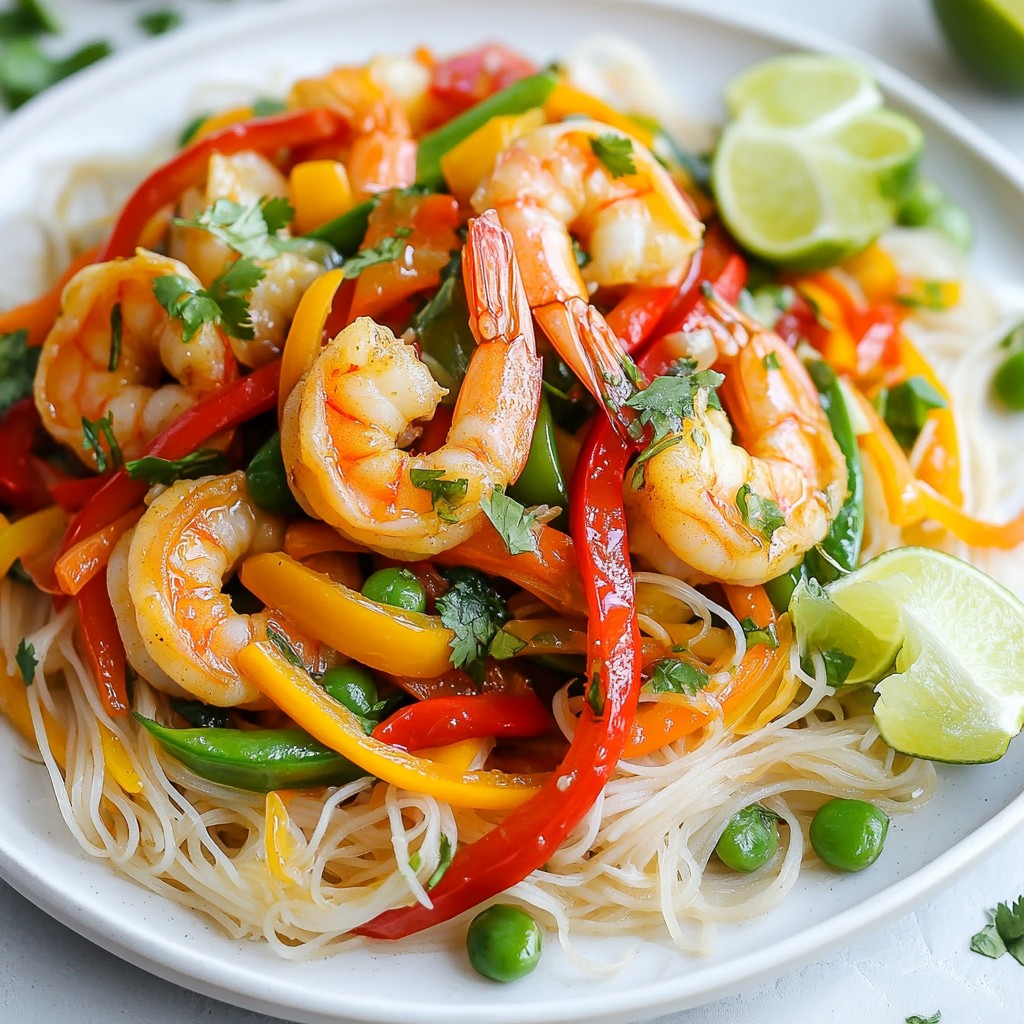
Are you craving a quick and tasty meal? This Speedy Dinner Shrimp Stir-Fry with Rice Noodles is your answer! Packed with fresh veggies and succulent shrimp, it’s both easy and satisfying. In just a few simple steps, you’ll whip up a colorful dish that delights the palate and brightens your dinner table. Let’s dive into this fast, fun recipe that’s perfect for busy weeknights!
Why I Love This Recipe
- Quick and Easy: This recipe can be prepared in just 20 minutes, making it perfect for busy weeknights.
- Flavor Packed: The combination of garlic, ginger, and soy sauce creates a vibrant and delicious flavor profile.
- Customizable: You can easily swap in your favorite vegetables or adjust the spice level to suit your taste.
- Healthy Option: With shrimp and fresh vegetables, this stir-fry is a nutritious choice that doesn't compromise on taste.
Ingredients
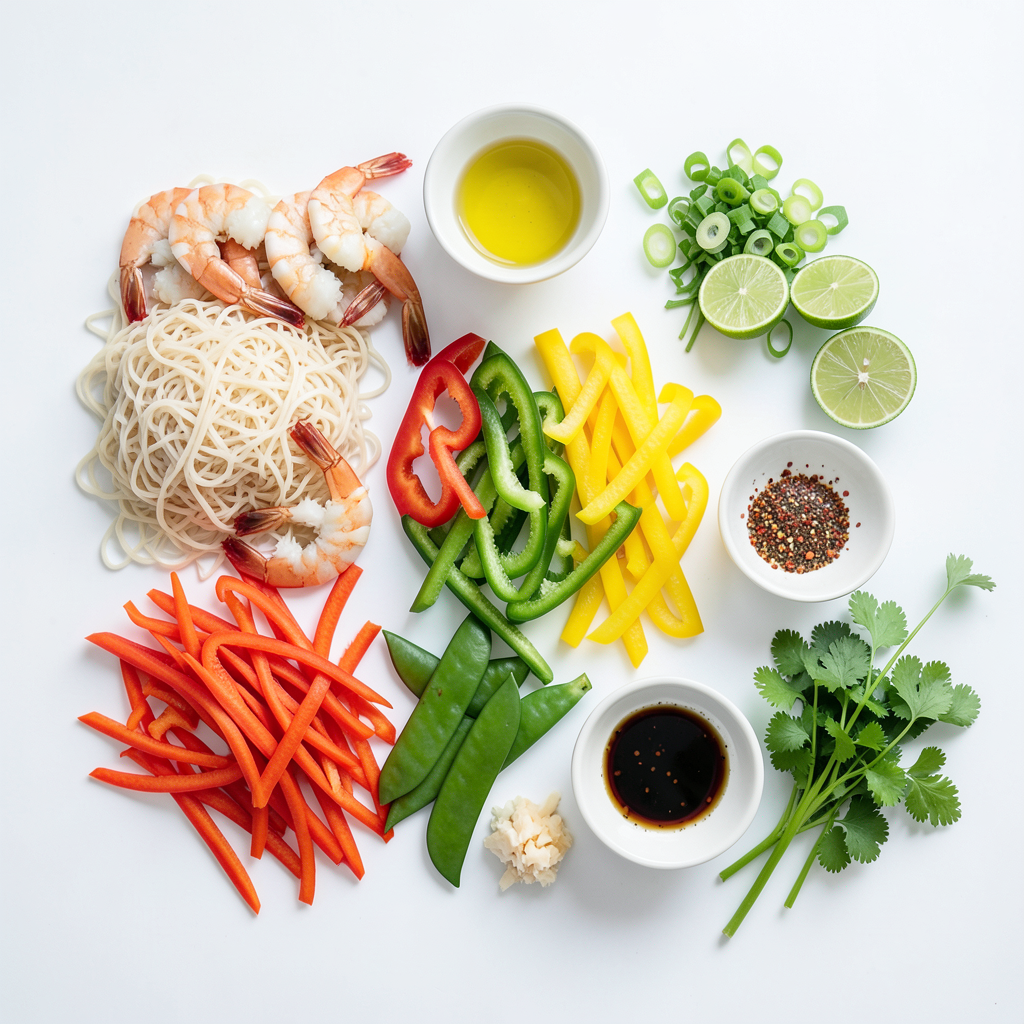
List of Required Ingredients
- 8 oz rice noodles
- 1 lb shrimp, peeled and deveined
- 2 tablespoons vegetable oil
- 1 cup bell peppers, julienned
- 1 cup snap peas, trimmed
- 1 carrot, julienned
- 3 cloves garlic, minced
- 1 tablespoon ginger, minced
- 3 tablespoons soy sauce
- 1 tablespoon oyster sauce (optional)
- 1 tablespoon sesame oil
- 1 teaspoon red pepper flakes
- 2 green onions, sliced
- Fresh cilantro for garnish
- Lime wedges for serving
Explanation of Ingredient Roles
Soy sauce adds deep, salty flavor. It gives the dish umami, a savory taste we love. Oyster sauce, while optional, adds a sweet and rich note. Fresh vegetables provide crunch and color. They also bring vitamins and nutrients. Use bright bell peppers, green snap peas, and crunchy carrots.
When choosing shrimp, look for a pink hue and firm texture. They should smell like the ocean, not fishy. Peeled and deveined shrimp make cooking easier. This saves time and effort in the kitchen. Fresh shrimp are best, but frozen works too. Just ensure they thaw fully before cooking.
Step-by-Step Instructions
Cooking the Rice Noodles
To cook the rice noodles, boil water in a pot. Once boiling, add the noodles and cook per the package instructions, usually about 4-6 minutes. Stir them gently to prevent sticking. When they are soft, drain the noodles in a colander. Rinse them under cold water to stop the cooking. Set them aside so they stay fresh.
Sautéing the Shrimp
Heat a large skillet or wok over medium-high heat. Add one tablespoon of vegetable oil. When the oil shimmers, it is ready. Add the shrimp in a single layer. Cook them for about 2-3 minutes. They should turn pink and opaque. Remove the shrimp from the skillet and set them aside.
Stir-Frying the Vegetables
In the same skillet, add another tablespoon of oil. First, add minced garlic and ginger. Stir for about 30 seconds until fragrant. Next, add the bell peppers, snap peas, and carrot. Stir-fry for about 4-5 minutes. You want them tender-crisp, which means they should be soft but still have a bite.
Combining Ingredients
Now, return the cooked shrimp to the skillet. Add the cooked rice noodles next. Pour in the soy sauce, oyster sauce, sesame oil, and red pepper flakes. Toss everything together well. Ensure all ingredients are evenly mixed and heated through. This will help all the flavors blend nicely.
Tips & Tricks
Time-Saving Techniques
- Prepping ingredients in advance: Chop your veggies and mince garlic and ginger ahead of time. This makes cooking quick and easy. Store them in airtight containers. You can also soak rice noodles in warm water for 10 minutes before cooking. This cuts down cook time.
- Using frozen shrimp for convenience: Frozen shrimp is often pre-cleaned and easy to use. Just thaw it under cold water for a few minutes. This saves time and effort.
Enhancing Flavor Profiles
- Adding spices or herbs for additional taste: You can spice it up! Try adding fresh basil or cilantro for more flavor. A pinch of cumin or paprika also adds depth.
- Substitute options for sauces: If you don’t have soy sauce, try using tamari or coconut aminos. You can also mix in a bit of sriracha for a spicy kick.
Presentation Tips
- Garnishing for visual appeal: Use fresh cilantro and green onions to make your dish pop. A sprinkle of sesame seeds adds crunch and looks great.
- Serving suggestions with lime wedges: Serve your stir-fry with lime wedges on the side. A squeeze of lime brightens the flavors and adds a fresh touch.
Pro Tips
- Prep Ingredients Ahead: Have all your ingredients prepped and ready to go before you start cooking. This will help you move quickly and efficiently through the stir-fry process.
- High Heat is Key: Make sure your skillet or wok is hot enough before adding ingredients. This helps to sear the shrimp and vegetables, locking in flavor and texture.
- Customize Your Veggies: Feel free to substitute or add any vegetables you like. Broccoli, zucchini, or mushrooms are great options that work well in stir-fries.
- Perfecting the Sauce: Adjust the soy sauce and oyster sauce to your taste preference. A little more soy sauce can enhance the umami flavor, while oyster sauce adds depth.
Variations
Alternative Proteins
You can swap shrimp for chicken or tofu to change the dish. Chicken works well when cooked until golden. Tofu can absorb flavors nicely, making it a great choice for vegetarians. For a vegan option, just use tofu and skip the oyster sauce.
Different Vegetable Combinations
Feel free to get creative with veggies! Use seasonal choices like zucchini, asparagus, or broccoli. You can also pick your favorites, like mushrooms or bok choy. This makes the dish unique to your taste.
Sauces and Seasonings
Switch up the sauce for new flavors! Teriyaki sauce adds sweetness, while chili garlic sauce brings heat. Adjust the spice level by adding more or fewer red pepper flakes. This lets you customize the taste to your liking.
Storage Info
Storing Leftovers
To store your shrimp stir-fry, let it cool first. Place it in an airtight container. This helps keep it fresh. You can store it in the fridge for up to three days. If you want to keep it longer, freeze it for up to three months. Just remember, the texture may change after freezing.
Reheating Instructions
When it’s time to eat leftovers, reheat carefully. The best way to warm it up is in a skillet. Heat it on medium-low heat. Stir often to keep it from sticking. This helps maintain the texture. Avoid the microwave if you can. It can make the noodles soggy. If you must use the microwave, heat in short bursts and stir in between. Enjoy your quick and tasty meal!
FAQs
What type of shrimp is best for stir-fry?
For stir-fry, I prefer fresh shrimp. Fresh shrimp has a better taste and texture. However, frozen shrimp is also a good choice. It is easy to find and often more affordable. Just make sure to thaw it properly before cooking. Both types work well when cooked right.
Can I use other types of noodles?
Yes, you can use other noodles! Rice noodles are great, but try egg noodles or udon. Even zucchini noodles work if you want a low-carb option. Each type gives a different taste and texture. Feel free to experiment and find your favorite!
How do I make shrimp stir-fry gluten-free?
To make your shrimp stir-fry gluten-free, swap regular soy sauce for gluten-free soy sauce. You can also use tamari as a good option. Always check labels to ensure they are gluten-free. This small change keeps your meal safe and tasty!
In this article, we explored making a delicious shrimp stir-fry. We covered essential ingredients like rice noodles, shrimp, and veggies. You learned cooking techniques for perfect noodles and shrimp. Plus, we shared tips for enhancing flavors and presentation.
Good food is about fresh ingredients and easy steps. Use this guide to enjoy a tasty meal with all your favorite flavors. Happy cooking!