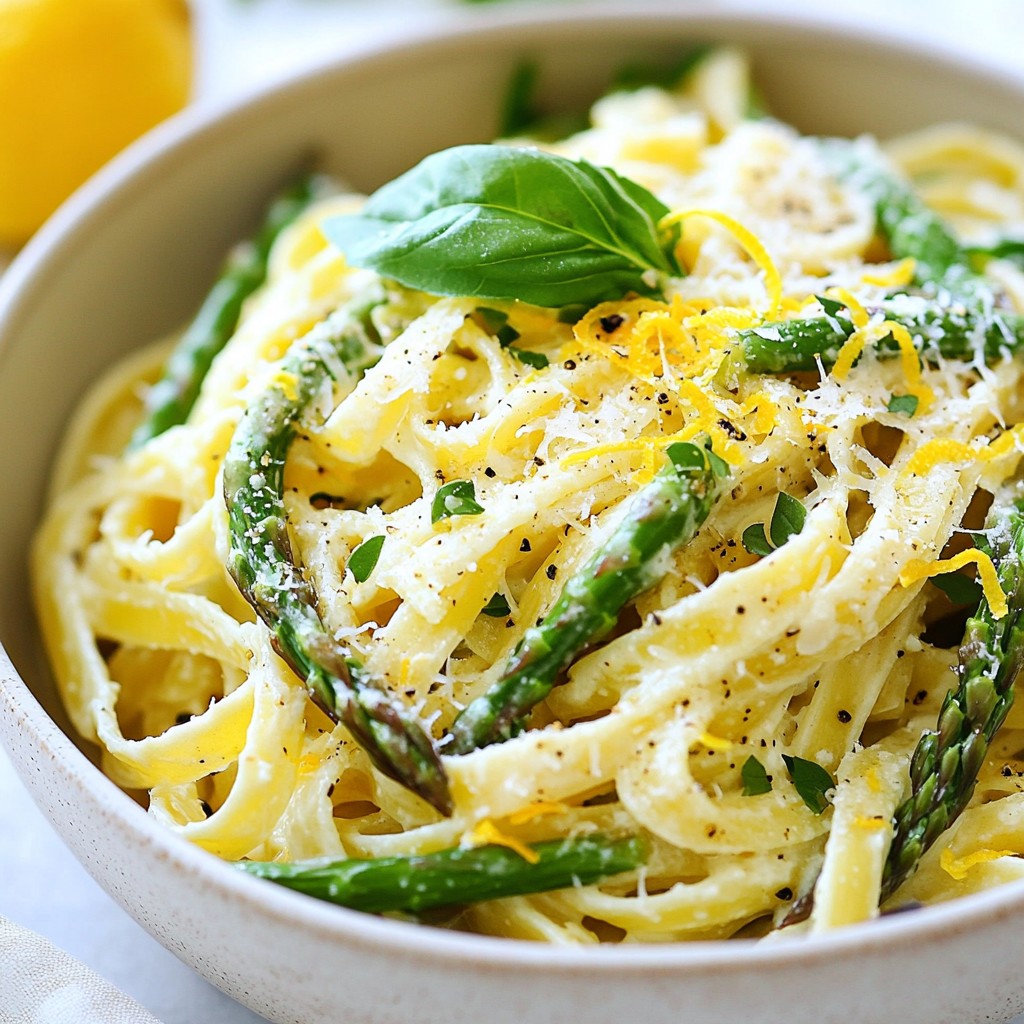
Spring is here, and so is the perfect dish: Creamy Lemon Asparagus Pasta! This bright and tangy meal bursts with flavor. It’s easy to make and packed with fresh ingredients, making it ideal for warm days. Whether you’re a busy parent or a novice cook, you’ll impress everyone at your table. Join me as we explore this delightful recipe and tips to make it shine!
Why I Love This Recipe
- Fresh and Vibrant: This dish features seasonal asparagus and bright lemon, creating a refreshing flavor profile that perfectly balances creaminess with zest.
- Quick and Easy: With a total prep and cooking time of just 25 minutes, this recipe is perfect for busy weeknights or when you want a gourmet meal in no time.
- Comfort Food with a Twist: While pasta is always a comfort food favorite, the addition of lemon and asparagus elevates it into a sophisticated dish suitable for any occasion.
- Customizable: This recipe serves as a great base that you can modify by adding proteins like chicken or shrimp, or even swapping in different vegetables to suit your taste.
Ingredients
List of Ingredients
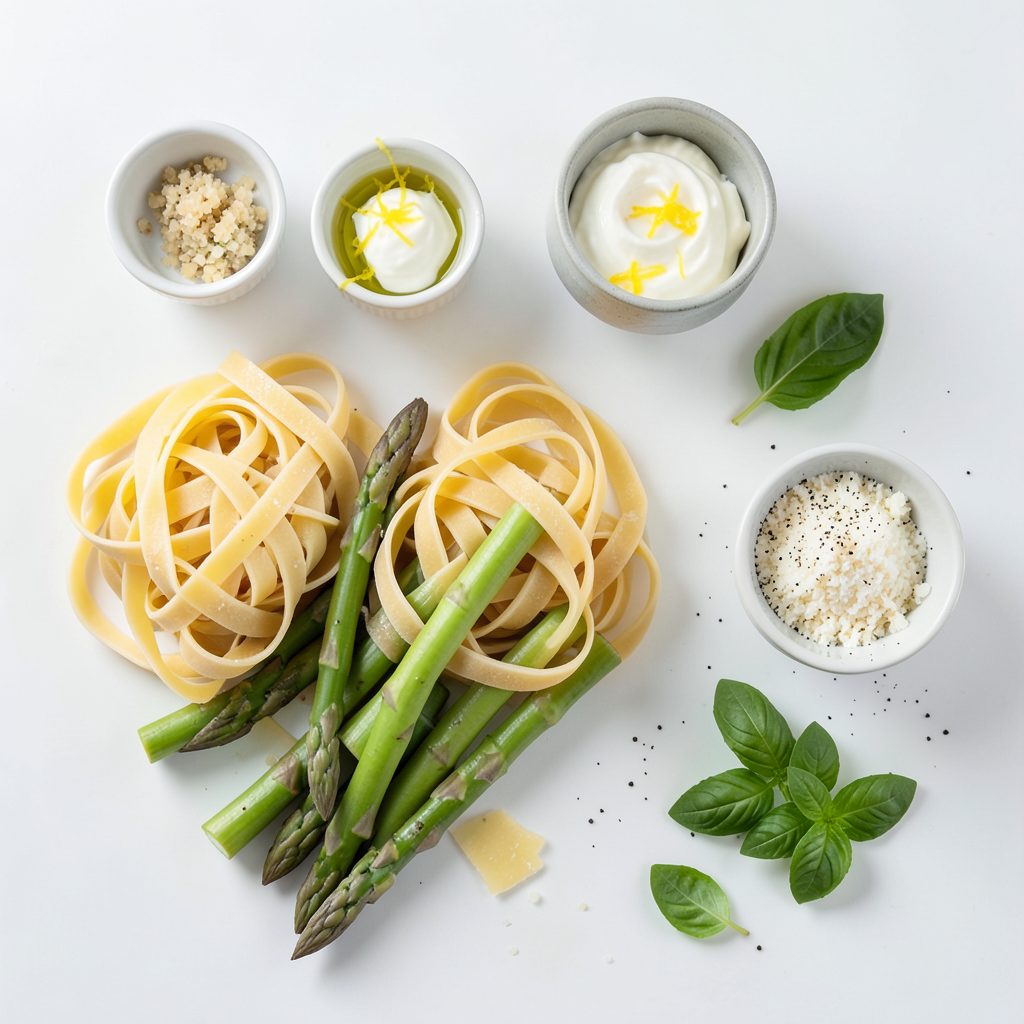
To make Creamy Lemon Asparagus Pasta, gather these simple ingredients:
- 8 oz fettuccine pasta
- 1 bunch fresh asparagus, trimmed and cut into 2-inch pieces
- 2 tablespoons olive oil
- 3 cloves garlic, minced
- 1 cup heavy cream
- Zest of 1 lemon
- Juice of 1 lemon
- 1/2 cup grated Parmesan cheese
- Salt and pepper to taste
- Fresh basil leaves for garnish
Recommended Brands
When choosing ingredients, quality matters. Here are some brands I trust:
- Pasta: Barilla or De Cecco for fettuccine
- Olive Oil: California Olive Ranch for good flavor
- Parmesan Cheese: BelGioioso for real taste
- Heavy Cream: Organic Valley for rich creaminess
These brands help create a dish that's full of flavor.
Fresh vs. Frozen Asparagus
Fresh asparagus shines in this dish. It has a crisp texture and bright taste. Look for firm, bright green stalks when buying fresh.
Frozen asparagus can work in a pinch. It's picked at peak ripeness and frozen quickly. However, it may be softer when cooked.
For the best outcome, I recommend using fresh asparagus. It enhances the dish and brings springtime freshness to your plate.
Step-by-Step Instructions
Cooking the Pasta and Asparagus
First, bring a large pot of salted water to a boil. This step is key for flavor. Once the water is bubbling, add 8 oz of fettuccine pasta. Cook it according to the package instructions until it is al dente. This usually takes around 8 to 10 minutes. In the last 2 minutes of cooking, add the trimmed asparagus. This helps the asparagus stay crisp. After cooking, drain the pasta and asparagus together. Make sure to save about 1/2 cup of pasta water for later.
Sautéing the Garlic
Next, grab a large skillet. Heat 2 tablespoons of olive oil over medium heat. When it's warm, add 3 cloves of minced garlic. Sauté the garlic for about 1 minute. You want it to smell great but not burn. Keep an eye on it to avoid a bitter taste.
Preparing the Cream Sauce
Now it's time to make the cream sauce. Pour in 1 cup of heavy cream and stir it well with the garlic. Add the zest and juice of 1 lemon. This gives the sauce a bright flavor. Bring the mix to a gentle simmer and let it cook for about 3 to 5 minutes. This allows the sauce to thicken slightly. If it gets too thick, add some of that reserved pasta water until it reaches the right consistency.
Tips & Tricks
Perfecting the Cream Sauce
To make the cream sauce smooth, heat it gently. Start by combining the heavy cream with lemon zest and juice. This mix needs to simmer, but not boil hard. Stir it often to avoid burning. If it thickens too much, add a bit of pasta water. This keeps the sauce rich and creamy without clumping.
Choosing the Right Pasta
Fettuccine works best for this dish. Its flat shape holds sauce well. You can try other pasta shapes like penne or spaghetti, but fettuccine gives the best texture. Cook it until it's al dente. This means it should be firm when you bite it.
Serving Suggestions
Serve the pasta in a big bowl for a family-style meal. Drizzle extra olive oil on top for shine and flavor. Add some lemon zest for a fresh touch. Place fresh basil leaves around the dish for color. This makes your meal look great and taste even better.
Pro Tips
- Use Fresh Asparagus: Always opt for fresh asparagus for the best flavor and texture. Look for bright green stalks and tight, closed tips.
- Don’t Overcook the Pasta: Cook the fettuccine just until al dente, as it will continue to cook slightly when tossed with the sauce.
- Adjust Sauce Consistency: If the sauce is too thick, gradually add the reserved pasta water until you achieve your desired creaminess.
- Garnish Wisely: Fresh basil not only adds color but also enhances the dish’s flavor. Consider using a mix of herbs for more complexity.
Variations
Adding Proteins (Chicken, Shrimp)
You can easily boost your creamy lemon asparagus pasta by adding protein. Chicken or shrimp works great. For chicken, use boneless, skinless breasts. Cook the chicken in the skillet before adding garlic. Once cooked, remove it and set it aside. Then, follow the recipe as usual. For shrimp, add peeled and deveined shrimp after the garlic. Cook until they turn pink, about 3-4 minutes. Both options enhance flavor and make the dish more filling.
Vegetarian Alternatives
If you prefer a vegetarian dish, consider adding more veggies. Try bell peppers, peas, or mushrooms. Sauté these vegetables with garlic for added taste. You can also use chickpeas for a protein boost. They add a nice texture and flavor. Simply rinse and drain canned chickpeas, then toss them in with your pasta. These alternatives keep your meal vibrant and delicious while sticking to your dietary needs.
Dairy-Free Options
For a dairy-free version, swap the heavy cream and Parmesan cheese. Use full-fat coconut milk or a cashew cream. To make cashew cream, blend soaked cashews with water until smooth. This adds creaminess without dairy. For cheese, try nutritional yeast. It gives a cheesy flavor without any milk. These swaps make the dish light yet still creamy and rich, perfect for everyone!
Storage Info
Best Storage Practices
To keep your creamy lemon asparagus pasta fresh, store it in an airtight container. Place it in the fridge within two hours of cooking. This helps keep flavors bright and the pasta firm. It’s best to eat it within three days for the best taste. If you want to keep it longer, freezing is a good option.
Reheating Instructions
When you’re ready to enjoy leftovers, reheat the pasta gently. Place it in a skillet over low heat. Add a splash of water or extra cream to help loosen the sauce. Stir until it’s warmed through. You can also use the microwave, but be careful not to overheat it. Heat in short bursts and stir often.
Freezing the Pasta
Freezing your creamy lemon asparagus pasta is easy. First, let it cool completely. Then, place it in a freezer-safe container or bag. Make sure to remove as much air as possible. This helps prevent freezer burn. It can last up to three months in the freezer. When you’re ready to eat, thaw it in the fridge overnight before reheating.
FAQs
How do I prevent the cream from curdling?
To keep the cream smooth, avoid cooking it on high heat. Start with a medium heat and stir often. Add the lemon juice slowly, mixing well. This helps the cream blend better with the sauce. If you notice any small lumps, remove it from heat and whisk quickly. This will help restore the cream's texture.
Can I use a different type of pasta?
Yes, you can! While fettuccine works great, you can use any pasta you enjoy. Penne, spaghetti, or even gluten-free options fit well with this dish. Just make sure to cook it according to the package's instructions. Each type gives a unique taste and texture.
What can I substitute for heavy cream?
If you want a lighter option, use half-and-half or whole milk. For a dairy-free choice, try coconut cream or cashew cream. These options provide a rich texture without dairy. Just adjust the cooking time to ensure the sauce thickens properly.
This blog post covered how to make a delicious pasta dish with asparagus. You learned about the right ingredients, brands to choose, and the best ways to prepare them. I shared tips for a smooth cream sauce and options for proteins or vegetarian dishes. Proper storage methods ensure you keep leftovers fresh. Remember, cooking is fun, so don’t be afraid to try new things! Your kitchen can be a place for creativity and good food. Enjoy your meals, and savor every bite!